

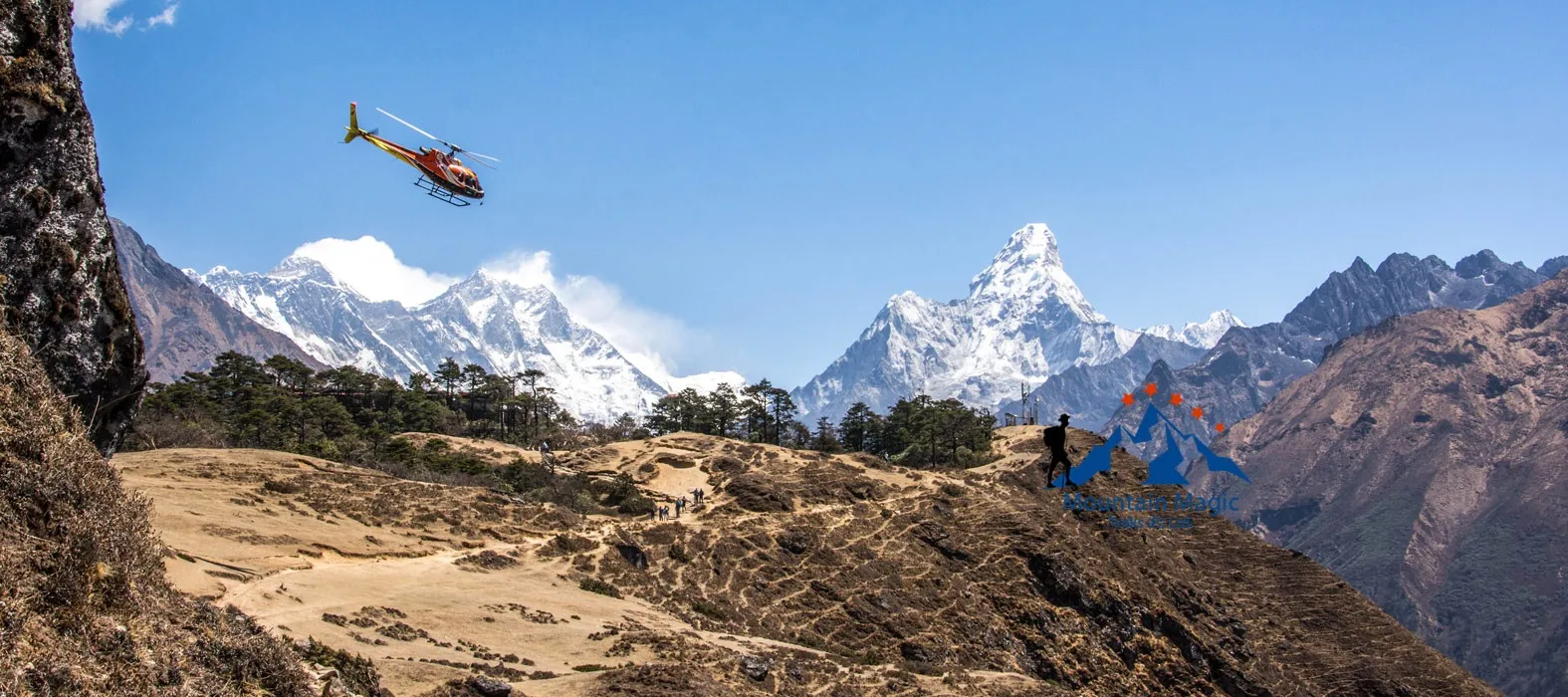
The Everest region is not only about reaching a famous base camp. The real experience comes from moving slowly through a changing landscape and watching the mountains become larger with every day.
The Everest Base Camp Trek With Helicopter Return combines a classic walking route with a helicopter journey at the end. The listed trip lasts 10 days and includes acclimatization stops in Namche Bazaar and Dingboche. The route reaches Everest Base Camp and Kala Patthar before the return flight toward Kathmandu.
A Different Start to a Mountain Trek
Many Everest journeys begin with a flight to Lukla.
Here, the trip starts with a helicopter from Kathmandu. The flight takes about 45 minutes according to the itinerary and offers early views of the Himalayan landscape. After landing, the walking section begins toward Phakding.
Let the Trail Introduce You
The first walking day covers about 7 kilometers.
The trail passes through green hills, Sherpa settlements, monasteries, and sections of the Dudh Koshi River.
This is a good time to forget about speed.
Find a comfortable rhythm and enjoy the lower part of the Khumbu before the altitude becomes more demanding.
Namche Is Where Things Change
The walk from Phakding to Namche Bazaar takes around six to seven hours.
The route follows the Dudh Koshi before reaching the final uphill section toward Namche. Once there, the environment feels very different from the lower valley.
Make the Extra Day Useful
The itinerary gives you an acclimatization day in Namche.
You can hike toward the Everest View Hotel, visit Khumjung and Khunde, or explore the local area.
The goal is not to exhaust yourself.
Your body needs time to adjust before you climb higher.
Tengboche Brings a Quiet Moment
From Namche, the trail continues toward Tengboche.
The village is known for its Buddhist monastery and wide views of the surrounding mountains. The itinerary recommends reaching the monastery before the afternoon ceremony.
Experience the Place, Not Just the View
Take a moment to notice the prayer flags, monastery, and mountain setting.
If you enter a religious space, follow local customs.
The Everest region has a strong Sherpa and Buddhist heritage, and understanding this side of the journey adds more depth to the trek.
Dingboche Means a Slower Walk
The trail continues from Tengboche to Dingboche at around 4,410 meters.
By now, the air is much thinner.
Let Your Body Lead
The itinerary includes another acclimatization day here.
A common option is hiking toward Nangkartshang Peak, which reaches about 5,083 meters. The route is designed to help trekkers spend time at a higher elevation before continuing toward Lobuche.
Do not worry if your pace becomes slower.
At high altitude, patience is more useful than speed.
The Glacier Landscape Appears
After Dingboche, the scenery becomes more rugged.
Trees become less common, while rocky slopes, glaciers, and high peaks dominate the view.
Thukla Is Worth Remembering
The trail reaches Thukla before climbing toward Thukla Pass.
Memorials here honor climbers who lost their lives in the Everest region.
It is a natural place to pause.
The mountains are beautiful, but they also demand respect.
Lobuche Brings the Goal Closer
From Dingboche, the trek continues toward Lobuche.
The route passes through Thukla and follows views of the Khumbu Glacier, Pumori, Lobuche East, Nuptse, and other peaks.
Keep Your Energy in Reserve
The higher you go, the more valuable your energy becomes.
Walk steadily.
Take short breaks.
Eat properly.
Drink enough water.
There is little benefit in reaching the next stop quickly if you arrive completely exhausted.
The Big Day at Everest Base Camp
The route from Lobuche to Gorakshep and then Everest Base Camp is one of the longest days.
The itinerary lists around 15 kilometers and seven to nine hours of trekking, with Everest Base Camp at approximately 5,364 meters.
Use a Small Daypack
After reaching Gorakshep, you can leave most of your luggage at the lodge.
Carry only the essentials for the Base Camp walk.
Useful items include:
-
Water
-
Snacks
-
Warm clothing
-
Sunglasses
-
Sunscreen
-
Camera
-
Personal essentials
A lighter pack makes the high-altitude section easier.
Everest Base Camp Is Only Part of the Story
When you reach Base Camp, take time to enjoy the surroundings.
The Khumbu Glacier and nearby mountains create a completely different environment from the green valleys you saw earlier.
Remember the Distance You Covered
It is easy to focus only on the photograph.
Instead, look back mentally at the journey.
You crossed rivers.
You walked through Sherpa villages.
You adjusted to higher elevations.
You passed monasteries and glaciers.
Now you are standing at one of the most famous trekking destinations in the Himalayas.
Kala Patthar Gives You the Wider View
The next major highlight is Kala Patthar.
The itinerary lists its highest point at about 5,545 meters. It is known for its broad views of Everest, Pumori, Lhotse, Nuptse, glaciers, and surrounding peaks.
Early Morning Is Special
The climb begins early.
The cold can be strong, but the changing morning light makes the mountains look different every few minutes.
Take your time at the viewpoint.
This is not a place worth rushing through.
The Helicopter Brings a New Perspective
This is where the Everest Base Camp Trek With Helicopter Return becomes different from a standard Everest Base Camp trek.
After the Kala Patthar section, the journey returns by helicopter instead of retracing the complete walking route.
Watch the Mountains Shrink Below You
The aerial view can be surprising.
The trails that took hours to walk become thin lines.
Villages look tiny.
Valleys appear much larger.
Glaciers, rivers, forests, and mountain ridges connect into one huge landscape.
You finally see the region as a whole instead of one trail at a time.
Weather Can Change the Return
Helicopter travel in the Himalayas depends on conditions.
The itinerary estimates around one hour and thirty minutes of flight time from Gorakshep to Kathmandu in clear weather, but actual airtime can vary.
Leave Room for Delays
The itinerary also notes that passengers may need to wait at Lukla while the helicopter gathers passengers for the onward flight.
That means you should avoid creating a tight schedule after returning to Kathmandu.
A little extra time can save a lot of stress.
Why the Return Makes the Trek Different
The Everest Base Camp Trek With Helicopter Return gives you two ways to experience the same region.
Walking shows you the details.
You notice villages, bridges, rivers, monasteries, trails, and people.
The helicopter shows you the scale.
You see how those valleys, glaciers, and mountains fit together.
One experience is close and slow.
The other is wide and fast.
Together, they create a memorable finish.
The Journey Is Bigger Than the Destination
Reaching Everest Base Camp is a major goal, but the journey gives that achievement meaning.
The lower valleys introduce you to the Khumbu.
Namche gives your body time to adjust.
Tengboche brings culture into the trip.
Dingboche prepares you for high altitude.
Lobuche brings you close to the glaciers.
Base Camp marks the main destination.
Kala Patthar gives you one of the best wide views.
Then the helicopter lets you look back at everything from the sky.
That is the real appeal of the Everest Base Camp Trek With Helicopter Return.
You do not simply visit Everest.
You experience the region step by step and then leave with one final view that puts the entire journey into perspective.
FAQs
How long is the itinerary?
The listed trip length is 10 days from arrival to departure in Kathmandu.
Where are the acclimatization days?
The itinerary includes acclimatization days in Namche Bazaar and Dingboche.
How high is Everest Base Camp?
The listed elevation is approximately 5,364 meters.
What is the highest point?
Kala Patthar is listed at approximately 5,545 meters.
Is the route to Base Camp completed on foot?
Yes. The itinerary includes walking to Everest Base Camp before the helicopter return.
Can weather affect the helicopter?
Yes. Mountain weather can affect helicopter timing, so flexible travel plans are important.